
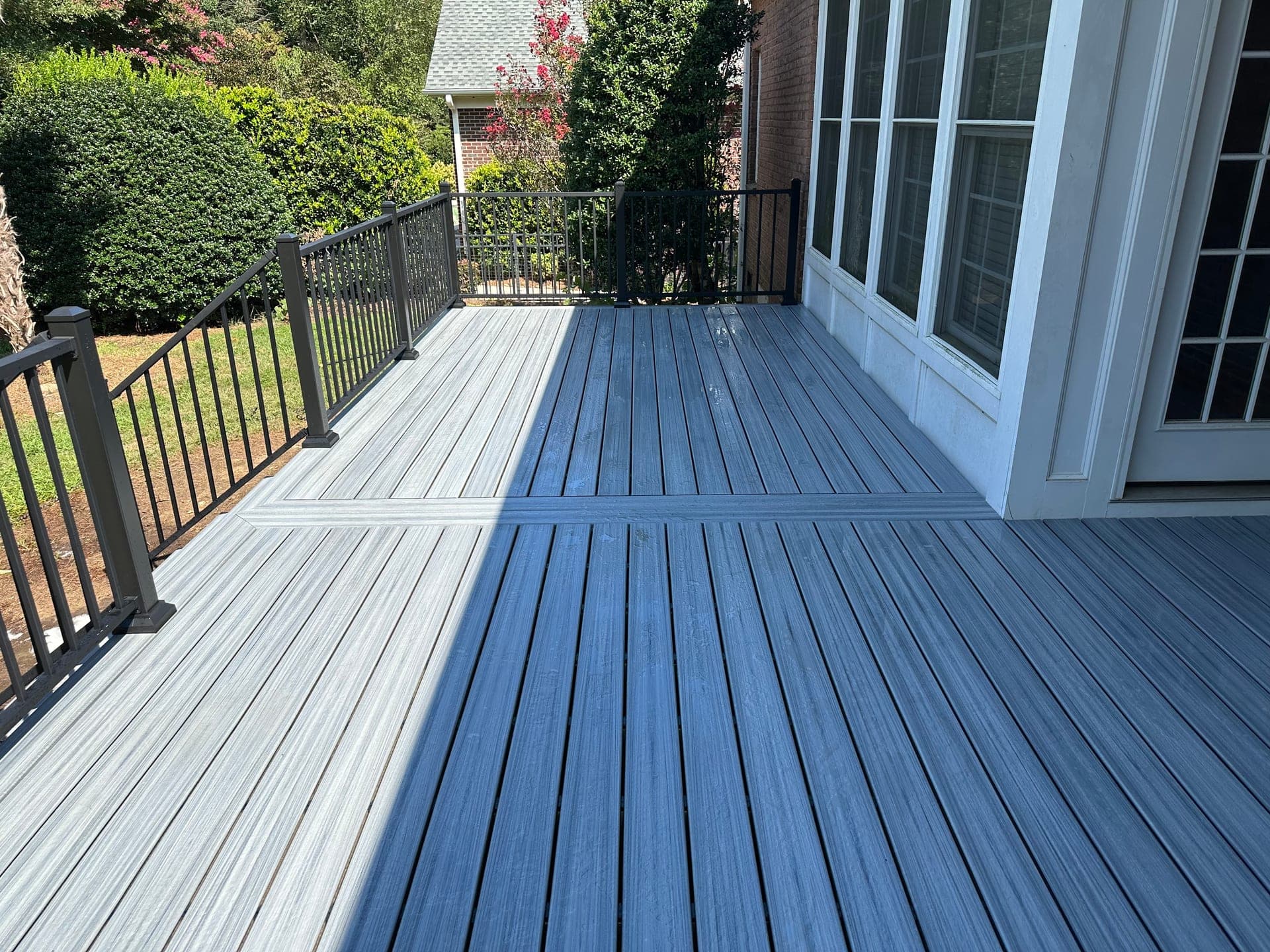
Understanding the true lifespan of composite decks is crucial for homeowners. While manufacturers advertise impressive durability, real-world conditions can tell a different story.
Manufacturer Claims vs. Real-World Data
When considering a composite deck, it's essential to differentiate between what manufacturers claim and what we've observed in the field over the years. Many manufacturers tout lifespans of 25-30 years for their composite materials, often backed by warranties that reflect this. However, these claims can be misleading when we factor in local environmental conditions.
The Impact of Carolina Weather
Here in the York County area, and particularly in neighborhoods like Fort Mill and Tega Cay, we face unique weather challenges. Our Piedmont region experiences a significant freeze-thaw cycle, especially in winter, which can cause materials to expand and contract. This movement can lead to structural issues in a composite deck over time, potentially shortening its lifespan.
Moreover, the Carolina summer humidity can also affect composite decks. While they are designed to resist moisture better than traditional wood, they are not entirely impervious to the effects of our sticky, humid summers. We’ve seen instances where moisture can lead to mold or mildew if the deck is not properly maintained, which can further impact its lifespan.
Real Field Data on Composite Deck Lifespan
Based on our extensive experience in the Rock Hill area and surrounding communities, we often find that composite decks last anywhere from 15 to 25 years in real-world scenarios. The lifespan can vary significantly based on maintenance practices, installation quality, and environmental exposure. Here’s a breakdown of factors that influence durability:
- Installation Quality: A poorly installed deck can lead to premature wear and tear. Proper spacing, drainage, and structural support are crucial.
- Maintenance: Regular cleaning and occasional sealing can enhance the lifespan considerably. Neglect can result in a buildup of dirt and moisture, leading to decay.
- Local Conditions: As mentioned, our freeze-thaw cycles and humidity levels can drastically affect how long a composite deck will last. Areas with significant exposure to direct sunlight may also experience fading and heat expansion issues.
Local Regulations and Considerations
Before undertaking a composite deck project, it’s essential to understand local regulations. In York County, obtaining the necessary permits is crucial, especially if you're building something that requires structural support. Compliance with local codes ensures that your deck meets safety standards, which ultimately contributes to its longevity.
Conclusion
When investing in a composite deck, it's vital to have realistic expectations based on both manufacturer claims and field data. While you can expect a composite deck to last, the range is often narrower than advertised due to our specific local conditions and maintenance practices. We recommend discussing your deck project with a local expert who understands these nuances to help you make an informed decision.
If you’re considering a composite deck for your home in the Rock Hill area or surrounding communities, let us help you understand your options. We can provide insights tailored to our local climate and conditions to ensure you get the most out of your investment.