
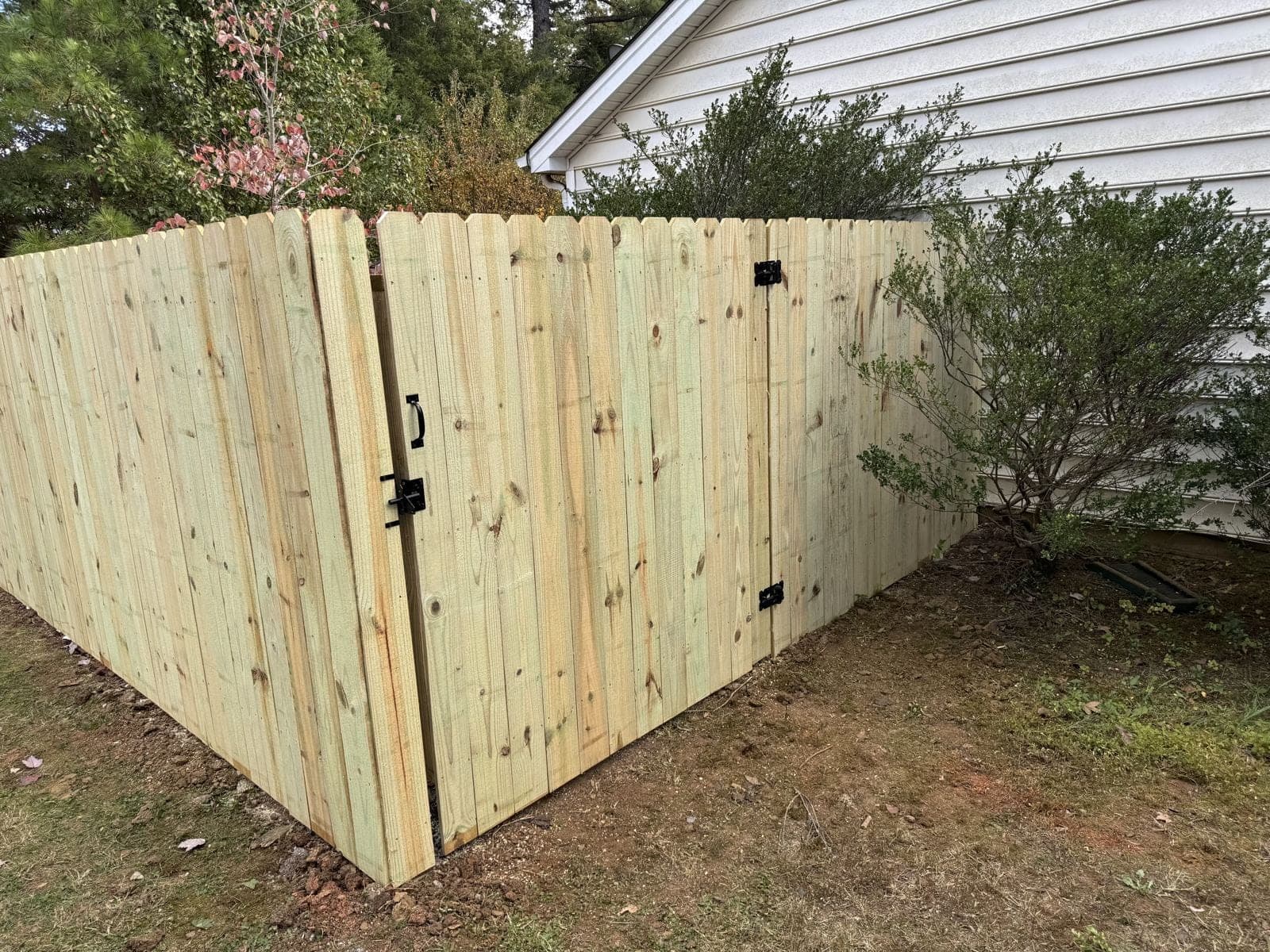
Deciding between fence staining and sealing? Both protect your investment, but they serve different purposes. Here’s what you need to know.
Understanding the Basics: Staining vs Sealing
When it comes to maintaining your wooden fence, understanding the differences between staining and sealing is crucial. Staining not only enhances the natural beauty of the wood but also provides a layer of protection against harmful UV rays and moisture. On the other hand, sealing focuses primarily on preventing water penetration, which can lead to rot and decay, especially in our humid Carolina climate.
When to Stain Your Fence
Staining is typically recommended every 2-3 years, depending on the exposure to the elements. In York County, where humidity levels can soar in the summer and the Piedmont freeze-thaw cycle can take a toll, staining helps to maintain the integrity of your wood fence. If you notice fading colors or signs of wear, it’s time to consider a fresh stain.
Benefits of Staining
- Aesthetic Appeal: Enhances the natural grain of the wood, giving your fence a rich, warm look.
- UV Protection: Prevents sun damage that can cause discoloration and cracking.
- Mold and Mildew Resistance: Many modern stains include fungicides to combat the growth of mold, which is essential in our humid climate.
When to Seal Your Fence
Sealing is ideal if your fence is relatively new, as it can help protect it from the elements right from the start. We recommend sealing your fence every 3-5 years, depending on the quality of the sealant and your local weather conditions. If you notice water pooling on the surface instead of soaking in, it’s a sign that your seal is wearing off.
Benefits of Sealing
- Water Repellent: Creates a protective barrier that prevents moisture from entering the wood, reducing the risk of rot.
- Longevity: Extends the life of your fence by maintaining its structural integrity.
- Cost-Effective: Usually less expensive than staining, making it a good option for homeowners looking to save on maintenance costs.
DIY vs. Hiring a Professional
DIY Approach
If you’re handy and enjoy home improvement projects, both staining and sealing can be done on your own. Here’s a quick look at what you’ll need:
- Tools: Brushes or rollers, sprayers, tarps, and protective gear.
- Materials: Quality stain or sealant suitable for your wood type. Look for products that are rated for our specific climate (check for UV protection and mold resistance).
Pros of DIY:
- Cost savings on labor.
- Satisfaction of completing the job yourself.
Cons of DIY:
- Time-consuming, especially for larger fences.
- Potential for uneven application if you’re inexperienced.
Hiring a Professional
For many homeowners, hiring a professional contractor can save time and ensure quality work. At Compass Contracting, we understand the nuances of Carolina wood and weather. Our team will assess your specific needs and apply the right materials effectively.
Pros of Hiring a Pro:
- Expertise in application techniques.
- Access to high-quality materials that may not be available at local stores.
- Time-efficient; you can focus on other home projects.
Cons of Hiring a Pro:
- Higher upfront costs compared to DIY.
- Need to schedule around the contractor's availability.
Cost Comparison
While costs can vary greatly depending on the size of your fence and the materials used, here’s a rough breakdown:
- DIY Staining: $0.50 to $1.50 per square foot, depending on the stain you choose.
- Professional Staining: $1.50 to $3.50 per square foot, factoring in labor and materials.
- DIY Sealing: $0.30 to $1 per square foot.
- Professional Sealing: $1 to $2.50 per square foot.
Keep in mind that in York County, you may need a permit for larger projects, so always check with local regulations before starting work.
Final Thoughts
Choosing between staining and sealing your fence depends on your specific needs, preferences, and budget. Both options offer unique benefits that can enhance the longevity and appearance of your fence. If you’re considering tackling this project, weigh the pros and cons carefully. Whether you opt for DIY or hire a professional, staying on top of your fence maintenance will safeguard your investment for years to come.
For questions or assistance with your next fencing project, we’re here to help. Reach out to Compass Contracting to discuss your needs, and we’ll ensure your fence stays looking great and standing strong against the elements.