
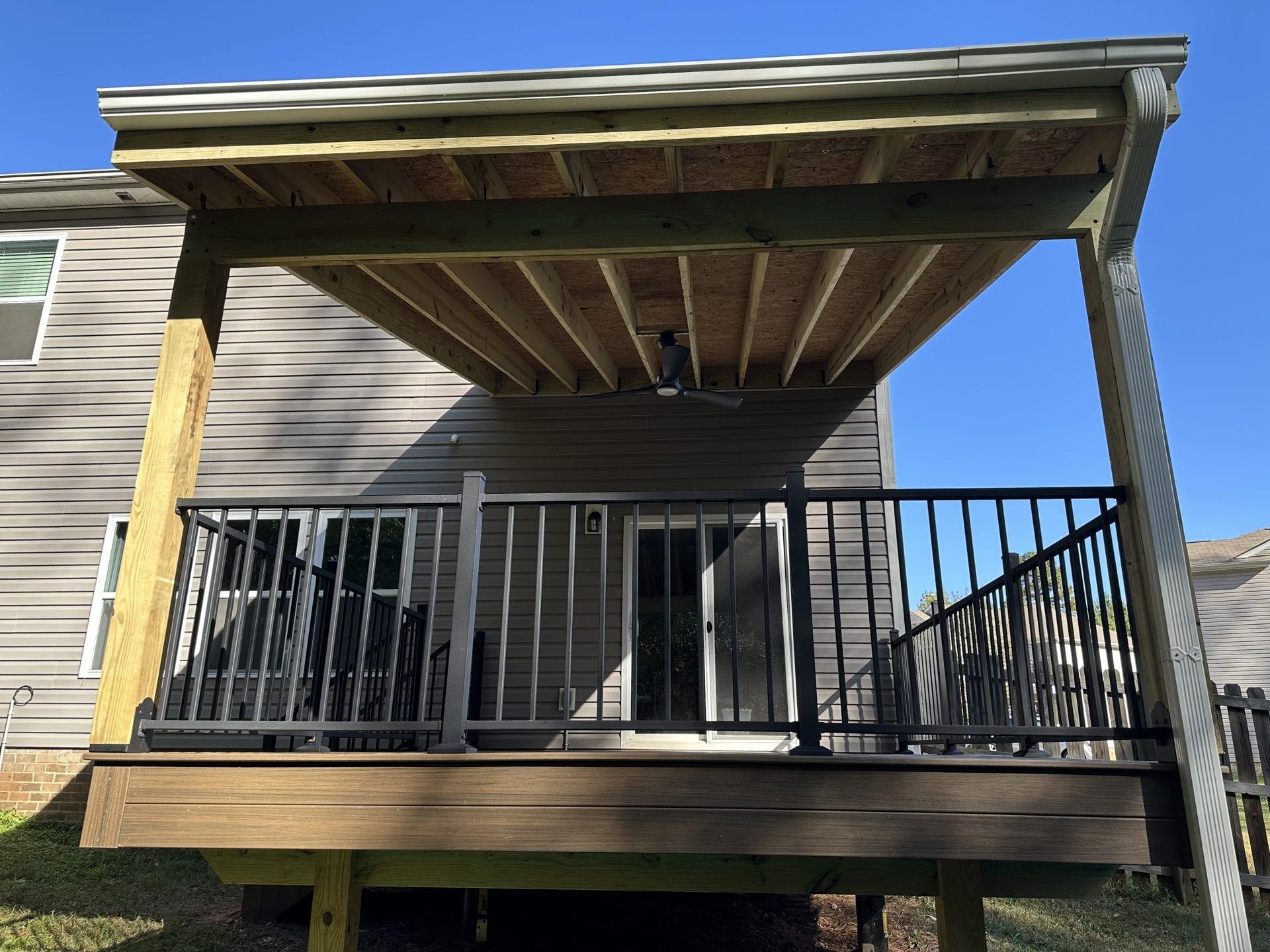
TL;DR: A sunroom can add resale value in York County, but rarely dollar for dollar. Appraisers give the most credit to permitted, heated, four-season rooms that count as living space, while a three-season room is usually valued more like a nice screened porch. If resale is your main goal, build it right and expect to recoup roughly half of what you spend.
The Short Answer
Yes, a well-built sunroom adds value to a home in Rock Hill, Fort Mill, Tega Cay, or Lake Wylie. No, it will not add as much as it costs. That is true of almost every addition, and anyone who tells you otherwise is selling something.
The more useful question is how much value it adds, and that depends on decisions you make before the first footing is dug. We have built sunrooms across York County for years, and the difference between a room that appraises well and one that barely moves the number usually comes down to a few specific choices.
How Appraisers Actually Look at a Sunroom
Living Space or Not?
Since 2022, Fannie Mae has required appraisers to measure homes using the ANSI Z765 standard. Under that standard, a room only counts toward gross living area (GLA) if it is finished, heated by a permanently installed system, connected to the main house, and meets ceiling height requirements.
That single rule drives most of the value conversation:
- Four-season sunrooms with insulated walls, a proper roof, and permanent heating and cooling can be counted as GLA. That means the appraiser applies something close to the home's price per square foot.
- Three-season rooms with no permanent heat do not count as GLA. They show up as a separate line item, and appraisers tend to compare them to screened porches and covered patios. The adjustment is real, but it is usually a fraction of what the same square footage would earn as living space.
If you want resale value, this is the biggest lever you have.
Comps Drive Everything
Appraisers need comparable sales to support any adjustment. In neighborhoods where sunrooms are common, like some of the established subdivisions around Lake Wylie and the older sections of Rock Hill, there is plenty of data and the room tends to get fair credit. In newer communities where few homes have one, the appraiser has less support and often stays conservative.
Neighborhood ceilings matter too. If your home is already one of the most expensive in Baxter Village or a Tega Cay subdivision, a sunroom will push you further above the comps, and appraisers are reluctant to follow.
What the ROI Data Says
Remodeling magazine's annual Cost vs. Value report has tracked sunroom additions for years, and the national results have consistently landed around half of the project cost recouped at resale. That puts sunrooms in line with other major additions. Exterior replacement projects like siding and windows typically recoup a higher percentage, which is worth knowing if you are deciding where to spend first.
Our local market tilts things slightly in your favor. The Charlotte metro keeps drawing buyers who want outdoor living space, and our climate makes a glassed-in room genuinely useful. Spring pollen coats everything yellow, mosquitoes run from April into October, and July humidity makes an open deck hard to enjoy at midday. A comfortable sunroom solves real problems, and buyers notice.
There is also value that never shows up on an appraisal. A bright sunroom photographs well, helps a listing stand out, and can shorten time on market. Agents in our area will tell you that matters even when the appraised number does not move much.
What Helps a Sunroom Hold Its Value Here
A Permit and a Final Inspection
This is non-negotiable. Depending on your address, the permit runs through York County Building Codes, the City of Rock Hill, the Town of Fort Mill, or the City of Tega Cay. If you are just over the line in Indian Land, it goes through Lancaster County instead. Many Fort Mill and Indian Land subdivisions also require HOA architectural review before anything is submitted.
Unpermitted additions get flagged by buyer inspectors, may be left out of GLA entirely, and can stall a closing. A clean permit history is part of what you are paying for.
A Foundation That Respects Our Clay
Piedmont red clay swells when wet and shrinks during dry spells, and our freeze-thaw cycles add more movement every winter. Footings need to be sized and set for that soil. Cracked slabs, sticking doors, and gaps where the room meets the house are exactly what a buyer's inspector writes up.
Glass and Climate Control Built for Our Summers
Low-E glass, an insulated roof, and properly sized heating and cooling are what separate a usable room from a greenhouse. A sunroom that hits 100 degrees in July or fogs up with condensation in January is not living space anyone wants to pay for.
Design That Looks Original to the House
Matching rooflines, siding, trim, and window styles make a sunroom read as part of the home. A room that looks bolted on reads cheap to buyers and appraisers alike.
When a Sunroom Is a Poor Investment
We will tell you plainly when we think a sunroom is the wrong call:
- You plan to sell within two or three years.
- Your home is already at the top of your neighborhood's price range.
- The room would swallow most of a small backyard.
- You want a three-season room but expect four-season resale value.
In those cases, a screened porch or composite deck usually delivers better value for the money.
Our Take
Build a sunroom because you will use it and enjoy it for years. Treat resale value as a bonus, not the reason. If resale does matter to you, go four-season, pull the permit, and make it look like it was always there.
If you are still weighing the idea, a good first step is asking a local agent how sunrooms have affected recent sales in your neighborhood. When you are ready to talk through three-season versus four-season options, foundation needs on your lot, or the permit process for your town, we are happy to walk your property and give you a straight answer about whether it makes sense.